

5 July 1690: Major-General Hugh Mackay began construction of an earth and timber fort on the site of the old Cromwellian fort at Inverlochy, to be named Fort William after the new king. Mackay stated: “in 11 days got it at its full height, the matter of 20 foot from the bottom of the fossee, pallisaded round, with a cheinin convert and glacis, a perfect defence against all attempts of such an enemy.”1 The material and tools required for the construction work, which included 5,000 palisades furnished by the town of Glasgow, had been shipped up from Greenock. The old Cromwellian Colonel John Hill, who had served in Lochaber in the 1650s and had a good relationship with the local clan chiefs, was appointed governor. The fort would be rebuilt in stone in the late 1690s.
5 July 1717: Brigadier George Preston, commander-in-chief in Scotland, issued orders for a captain and 100 soldiers to march to Inversnaid “to put a stop to the extraordinary depredations that have been committed within these last few days upon his grace the duke of Montrose’s grounds”.2 The depredations had been carried out by the Macgregors of Glengyle, and earlier in the year, Sir Patrick Strachan of Glenkindie had recommended that a barracks be constructed at Inversnaid to keep watch over the Macgregors. He had also recommended that, in the meantime, 100 soldiers should be stationed between Loch Lomond and Loch Katrine, and a further 40 at Kilmahog to prevent raiding.
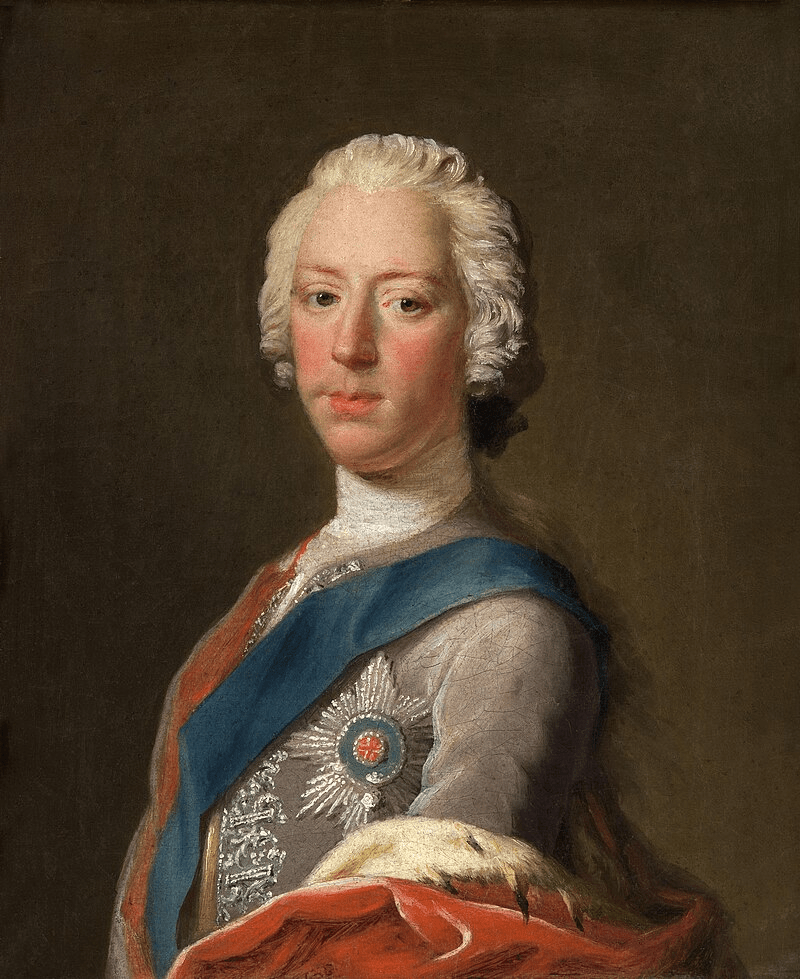
5 July 1745: Two French privateers, Du Teillay and Elisabeth, sailed from Belle Isle, France, carrying Charles Edward Stuart and his expedition to Scotland, along with money, arms, and around 70 Irish soldiers (not 700 as some accounts erroneously claim) in French service to support the planned Jacobite rising in the Highlands. The expedition had not been officially sanctioned by the French government and was in part financed by money from the Atlantic slave trade provided by Franco-Irish slave trader Antoine Walsh, who sailed with Charles on Du Teillay. On 9 July, the vessels were intercepted off the Lizard by His Majesty’s Ship Lion. During the engagement, Elisabeth was badly damaged and was forced to return to port, taking the arms and Irish volunteers with it. Du Teillay would continue on to Scotland, arriving off Eriskay on 23 July.3
Notes:
- Hugh Mackay, Memoirs of the War carried on in Scotland and Ireland, 1689-1691, p 98. ↩︎
- SP 54/12/140, quoted in David Stevenson, The Hunt for Rob Roy: The Man and the Myths, p 153. ↩︎
- John William O’Sullivan, Alistair Taylor (ed), Henrietta Taylor (ed), 1745 and After, p 49. ↩︎
Article first published on 5 July 2025
