

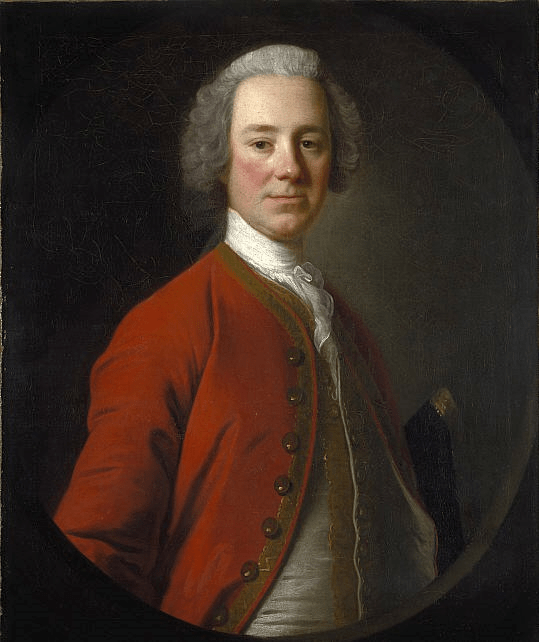
On the night of 16-17 February 1746, a force of around 1,500 government Highlanders from the 64th Highland Regiment and the Independent Highland Companies under the command of Major-General John Campbell, Earl of Loudoun, attempted to take Charles Edward Stuart by surprise at Moy Hall, south of Inverness.
Following the aborted invasion of England, the Jacobite army of Charles Edward Stuart withdrew back to Scotland to assemble a larger force and receive French military support. After the Jacobite victory at the Battle of Falkirk on 17 January 1746 and the failed siege of Stirling Castle, it was decided that the Jacobite army would withdraw northward and establish a base at Inverness to prepare for a renewed campaign.
On 2 February 1746, the Jacobite leadership held a council of war at the Drummond Arms Hotel in Crieff.1 Most were in favour of continuing the retreat, although Charles himself was against it. The Jacobite army was then split for the march north, with Lord George Murray taking the Lowlanders via Perth, Dundee, Montrose, and Aberdeen, while Charles, with the Highlanders, would take General Wade’s Crieff to Dalnacardoch road before heading on to Ruthven and Moy. The artillery and baggage would follow on along Wade’s Dunkeld to Inverness road.
On 4 February, Charles and his troops crossed Wade’s Bridge at Aberfeldy and arrived at Castle Menzies, where he enjoyed a day of shooting. On the 6th, Charles then made his way to Blair Castle while his troops continued on to Dalnacardoch. This was Charles’ second visit to Blair Castle, the first being in September the previous year at the start of the rising when James Murray, Duke of Atholl, had abandoned Blair to the Jacobites.
Charles would stay at Blair Castle until the 10th, before he continued towards Inverness. On the same day, an advance force of Jacobites under Major-General John Gordon of Glenbucket had forced the surrender of Ruthven Barracks in Badenoch. Charles arrived at Ruthven on the 12th and spent three nights at Ruthven Farm before heading on to Moy Hall on the 16th.
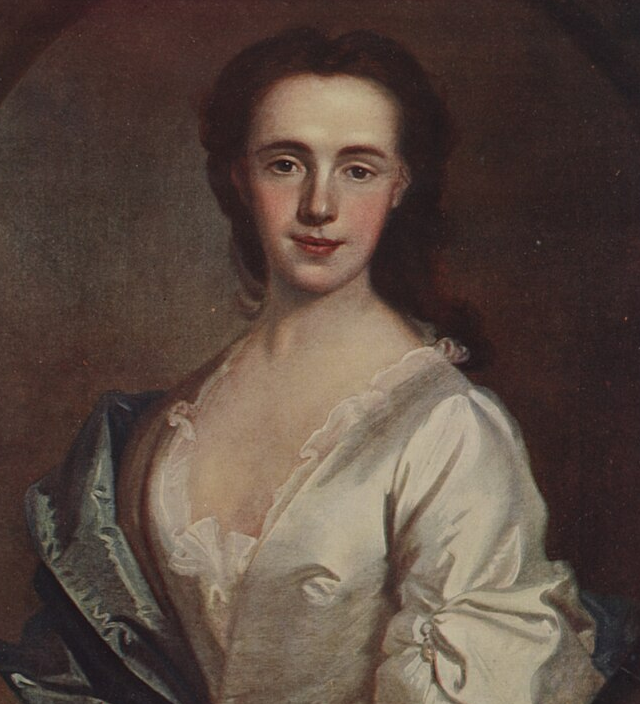
8 miles south of Inverness, Moy Hall was the home of pro-Hanoverian clan chief Angus Mackintosh, who was serving as a captain in the Black Watch, and his pro-Jacobite wife, “Colonel” Anne Mackintosh. At Moy Hall, Charles and a handful of followers were welcomed by Lady Mackintosh and settled into their lodgings. Here, Charles was separated from his main force, which encamped some distance to the south, although lookouts were posted forward to keep watch on the crossings on the River Nairn.2
In Inverness, John Campbell, Earl of Loudoun, commanded a force of around 2,000 government highlanders, including his own 64th Highland Regiment and the Independent Highland Companies. On hearing that Charles was just 8 miles to the south, Loudoun planned to march out with his forces and take him by surprise. At 8 o’clock in the evening of the 16th, he gathered his officers and instructed them to have their men ready by 11 o’clock. Orders were sent out to the forces in Inverness and the surrounding areas to begin to draw together.3
Loudoun’s preparations did not go unnoticed, and at around 9 o’clock, word was sent from Inverness to Moy Hall that “there was a great motion among the Garrison”.4 It was clear to Lady Mackintosh that something was brewing, and she informed Charles of the news before sending some of her own men along the road towards Inverness to keep watch. Among them was the local blacksmith, Donald Fraser, who commanded a party of ten men.
Just after midnight, Loudoun’s force, numbering 1,500, marched out of Inverness in blizzard conditions. Three miles along the road towards Moy, he detached an officer and thirty men to go on ahead, with orders to stop anyone on the road and prevent word of his march from reaching Moy. Loudoun planned to begin the attack just after daybreak.
In the early hours, a message reached Moy Hall informing Lady Mackintosh that Loudoun’s force had marched from Inverness around midnight, and she immediately went to wake Charles. He, along with his followers, left Moy Hall and went to the woods north of Loch Moy, while orders were sent to the Jacobite clansmen to march from their quarters and assemble at Moy.5 A second message arrived about an hour later, stating that Loudoun was about to cross the River Nairn and would be at Moy before daylight.
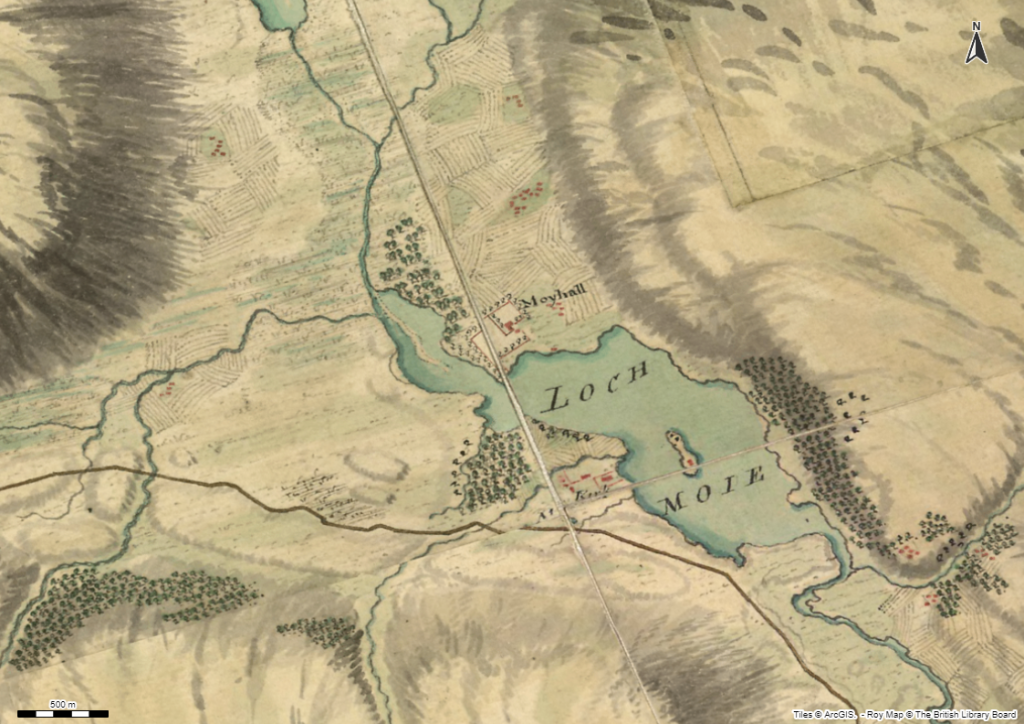
Loudoun’s forces marched to the heights above the River Nairn. The blacksmith, Donald Fraser, who was keeping watch on the road, heard them approaching and had the ten men under his command spread out along the roadside. Once the government Highlanders were close enough, Fraser’s men fired their muskets and shouted war cries of various clans to give the impression that a much larger force was present. In the darkness and heavy snow, this spooked many of Loudoun’s men, and he later reported the action:
We marched to the heights above the water at Nairn, when to my infinite mortification, saw and heard about a mile on my left, a running fire from the whole detachment. They saw, or imagined they saw, four men, on which they made this fire. But the consequence on the main body was very bad, for it threw us into the greatest confusion. I got my own regiment, at the head of which I was in the front, saved from falling out of the road. All faced to where they saw the fire. They were ten men deep, all pressed, and a good many dropping shots, one of which killed a piper at my foot, whilst I was forming them. The rest fell all back out of this road in a considerable way. It was utmost confusion, and it was a great while before I could get them brought up and formed; and the panic was still so great that it was with the greatest difficulty when the party came in, in twos and threes, that I could, standing before the muzzels of their pieces, prevent their firing on them.6
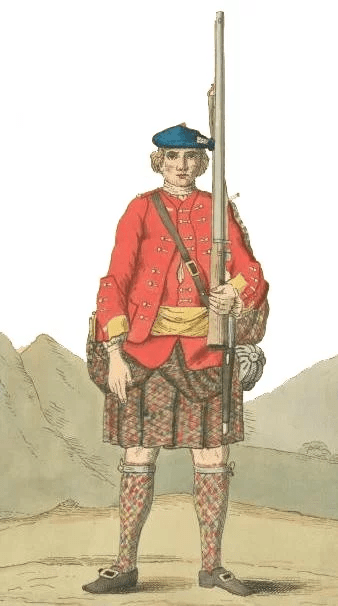
The five Independent Highland Companies at the rear of Loudoun’s column, numbering one-third of his force, withdrew from the field. In his report to Field-Marshal John Dalrymple, Earl of Stair, Loudoun stated that the Mackenzies, who were the fifth company from the rear, “went off entirely from their officers”. The officer commanding the company behind them, “a very good man, but very short sighted” did not realise the Mackenzies were fleeing and led his company to follow them. The following three companies then followed in the same manner.
Loudoun remained on the ground for another hour with his remaining forces, but realising that the enemy would now be alerted and with the possibility of encountering a superior force, he decided to withdraw back to Inverness. The only casualty in the action was on the government side: Duncan Bam MacCrimmon, Hereditary Piper to the Macleods of Dunvegan. Donald Fraser’s ruse had worked, and he returned to Moy Hall. Upon hearing of his exploits, Charles gave him some guineas and a captain’s commission.
After gathering his forces, Charles then marched to the River Nairn, where he encamped his men to better cover the road to Inverness and prevent any further surprises before he returned to Moy Hall later that day. The following morning, Charles led the Jacobite highlanders on towards Inverness.
Back in Inverness, Loudoun held a council of war with his senior officers and Duncan Forbes of Culloden, Lord President of the Court of Session. It was agreed that they would not be able to hold the town against the Jacobites, and the decision was taken to withdraw. Early on the 18th, after leaving a garrison under Major George Grant in Inverness Castle, Loudoun ferried his troops over to the Black Isle.
In March 1746, Captain Angus Mackintosh and his men were taken prisoner by the Jacobites in Dornoch. Charles parolled him into the custody of his wife, Lady Mackintosh, stating that “he could not be in better security, or more honourably treated”. Lady Macintosh greeted her husband with the words, “Your servant, captain”, to which he replied, “Your servant, colonel”, thereby giving her the nickname “Colonel Anne”.7
After the defeat of the Jacobite army by the Duke of Cumberland at the Battle of Culloden on 16 April 1746, Lady Mackintosh was taken into custody and carried to London, but was released soon after.
Following his victory, Cumberland held a ball in London, and among the guests he invited were Lady Mackintosh and her husband. Cumberland requested her hand to dance to the tune of “Up & Waur Them A’, Willie”, to which she agreed. Afterwards, she then asked the Duke to dance to a tune of her choice. She chose the Jacobite tune of “The Auld Stuarts back Again”, and to this the couple danced.8
Notes:
- “Marches of the Highland Army”, published in: Jacobite Memoirs of the Rebellion of 1745, p 100. ↩︎
- John William O’Sullivan, 1745 and After, p 129. ↩︎
- RA CP/MAIN/12 f.71-71f: John Campbell, 4th Earl of Loudoun to John Dalrymple, 2nd Earl of Stair, 12 March 1746. ↩︎
- 1745 and After, p 129. ↩︎
- Ibid. ↩︎
- RA CP/MAIN/12 f.71-71f: John Campbell, 4th Earl of Loudoun to John Dalrymple, 2nd Earl of Stair, 12 March 1746. ↩︎
- Robert Chambers, History of the Rebellion in 1745-6, (1847), p 188 ↩︎
- Ibid, p 260. ↩︎
Cite this article: Ritchie, N. S. (20 February 2026). Rout of Moy: The attempt to capture Charles Edward Stuart. Jacobite Wars. https://www.jacobitewars.com/articles/rout-of-moy/
