

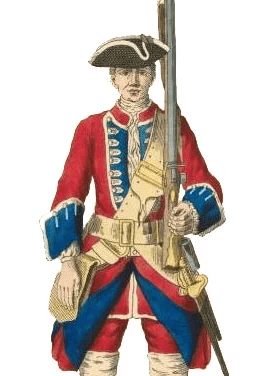
On 16 August 1745, two companies from the 2nd Battalion of Lieutenant-General James Sinclair’s 1st Regiment of Foot (Royal Scots), marching to reinforce the garrison of Fort William, were attacked by a party of Macdonalds at Highbridge in the first military engagement of the Jacobite Rising of 1745.
The beginning of the Jacobite ’45 and the move to reinforce Fort William
Upon receiving confirmation of Charles Edward Stuart’s arrival in the western highlands in late July 1745, Lieutenant-General Sir John Cope, the commander-in-chief in Scotland, took action to address the Jacobite threat. Cope’s objective was to thwart Charles from amassing a significant army, and he gathered his troops at Stirling in readiness for a march north, while also directing detachments to move into the Highlands to bolster the government outposts.
Fort William was the most isolated in the chain of Highland forts, and its location in Jacobite Lochaber made it particularly vulnerable. On 5 August, the ageing deputy-governor of Fort William, Captain Alexander Campbell, had written to Cope informing him of the weak state of the garrison. He also sent Cope an alarmist report on 11 August, which stated that 2,000 French troops had landed in Moidart, but he added that “the truth of the account I cannot affirin, as the Person that told me saw neither the Ships nor People.”1
That same day Cope sent orders to Captain John Sweetnam at Ruthven Barracks to go to Fort William and take command of the garrison, following his concerns over the ability of Captain Campbell.2 As an officer of engineers, Captain Sweetnam was also to make a report on the state of the defences and recommend improvements. Aware of the fort’s vulnerability in Jacobite Lochaber, Cope also sent two lots of reinforcements there. Captain Duncan Campbell of Inverawe at Inveraray received orders to reinforce Fort William with his detachment from Lord John Murray’s 43rd Highland Regiment (Black Watch).3
Captain John Scott and Captain James Thomson were also ordered to march to Fort William with their two understrength additional (depot) companies from the 2nd Battalion of Lieutenant-General James Sinclair’s 1st Regiment of Foot (Royal Scots), which were stationed in Perth. At that time, the 2nd Battalion was located in Ireland, and the depot companies served as holding units for new recruits. Perth was an ideal location for the companies to receive recruits from the Highlands, where the battalion drew about two-thirds of its numbers from.4
On 14 August, after traversing the Corrieyairack Pass by way of General Wade’s Dalwhinnie to Fort Augustus military road, Captain Sweetnam descended into the Great Glen and joined Wade’s Fort William to Inverness road. He then began the final leg of his journey south towards Fort William through the hostile Macdonnell of Glengarry and Macdonald of Keppoch country. Twelve miles north of Fort William, and six miles north of Highbridge, where the later action with the Royal Scots would take place, Captain Sweetnam was taken by surprise and captured by a party of Keppoch Macdonalds after he had stopped at the Letterfinlay Kingshouse for a dram of whisky.5
The Royal Scots march to Fort William
On 13 August, Captains Scott and Thomson, with their two companies comprising a total of no more than 60 men, set out from Perth and travelled north to Dunkeld, where they joined Wade’s Dunkeld to Inverness military road. This road was the second military road constructed by Wade, finalised between 1728 and 1730, subsequent to the completion of the Great Glen road from Fort William to Inverness in 1727.
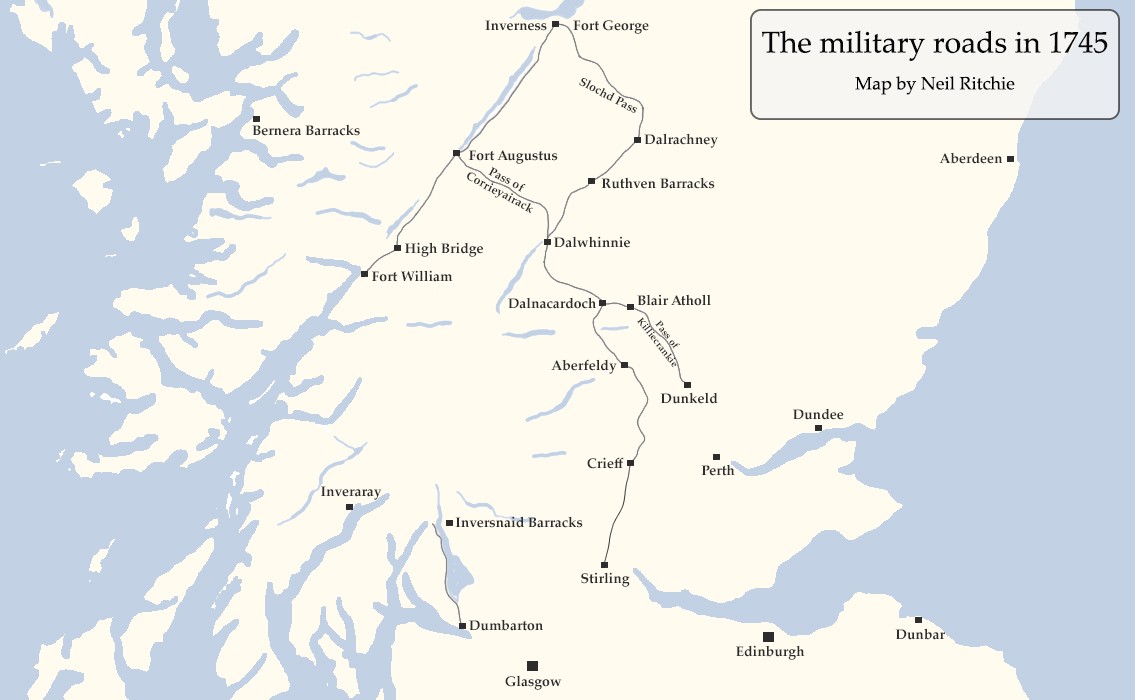
They arrived in Pitlochry late on the 13th and stayed overnight before continuing their journey the next morning. The second segment of their march led them through the Pass of Killiecrankie, past Blair Castle, and over the Drumochter Pass, before their arrival at Dalwhinnie on the evening of the 14th. The following day, they left the Inverness road and proceeded along Wade’s Dalwhinnie to Fort Augustus road, which was built in 1731 to link the Inverness and Great Glen roads.
Later that day, the Royal Scots reached Fort Augustus and spent the night there. They departed early on the 16th to finish the remaining 28 miles to Fort William. It appears that the governor of Fort Augustus, Major Hugh Wentworth, was not informed of the incident that had occurred to Captain Sweetnam two days earlier and permitted Captain Scott and Captain Thomson to continue.
The action at Highbridge
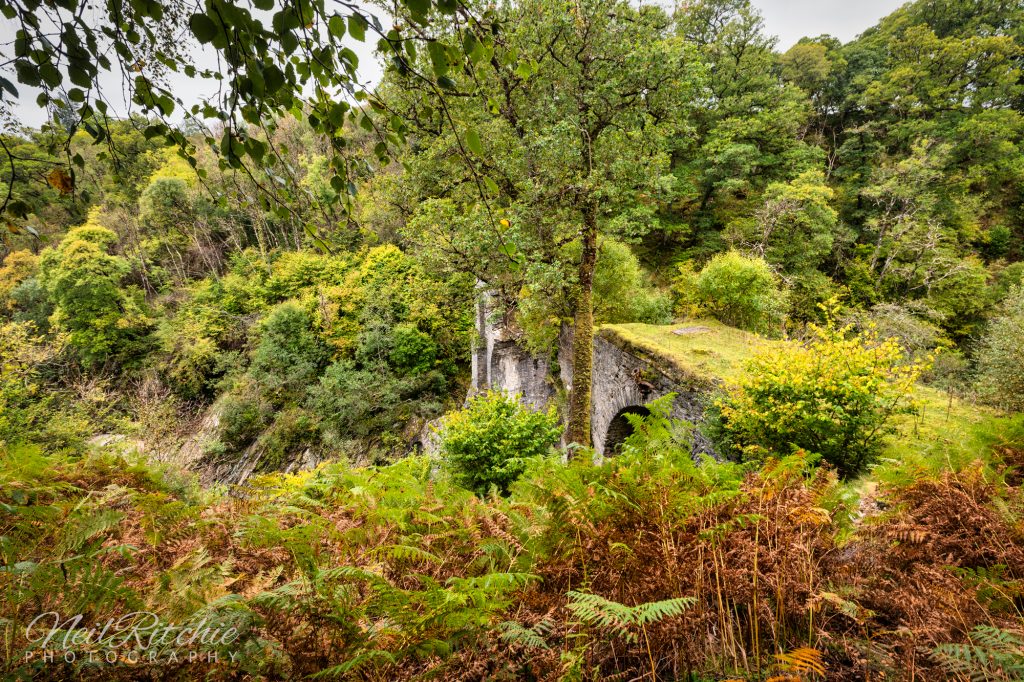
Heading south from Fort Augustus on Wade’s road, the route followed the present A82 to Aberchalder before continuing along the eastern shores of Loch Oich and Loch Lochy. After a 20-mile march, the Royal Scots neared High Bridge, situated 8 miles north of their intended destination. Wade’s triple-arched bridge, which crossed the steep gorge of the River Spean, was built in 1736 as part of the military road.
While travelling to Donald Cameron of Lochiel’s home of Achnacarry, John Murray of Broughton observed the Royal Scots as they marched and noted that they “march through what might have been properly stylled an Enemys country, and consequently ought to have been upon the watch by advancing a Serjeant and twelve men in case of accidents, but in place of this they march’d all in a Confused heap without regard to order or discipline.6
Aware of the efforts to reinforce Fort William and warned of the approaching government soldiers, Jacobite clan chief Alexander Macdonald of Keppoch sent a party of clansmen under his cousin Donald Macdonald of Tirindrish to hold off the redcoats while he went and gathered more support. With just eleven men and a piper, Tirindrish took up a position near the Highbridge Inn on the south side of the bridge.
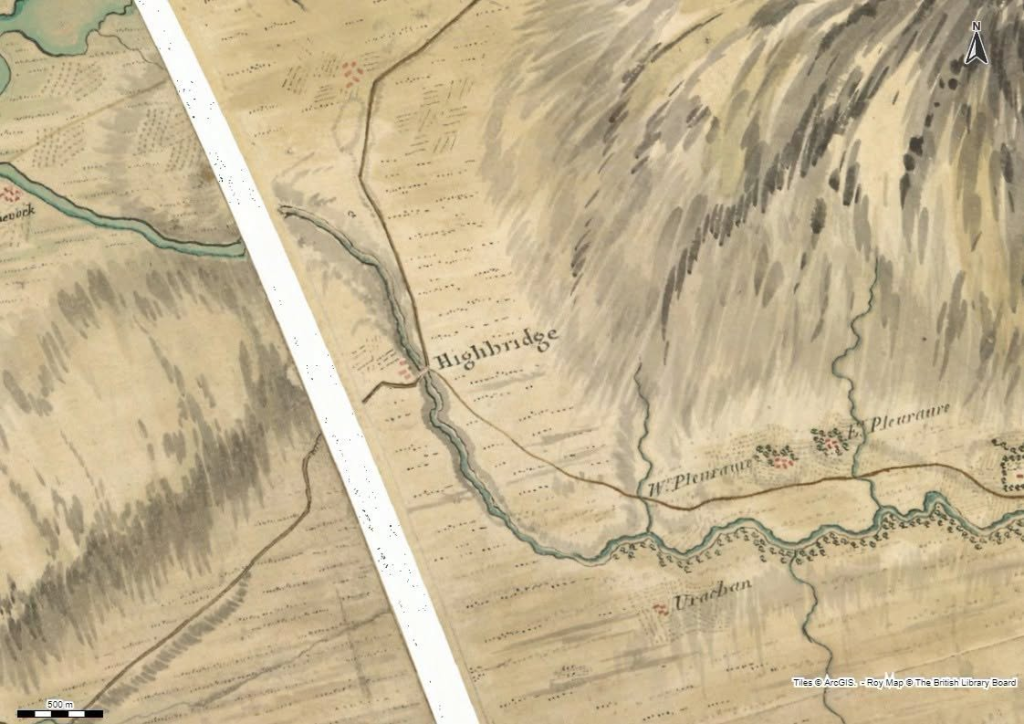
As Captain Scott approached the bridge, he could hear the sound of the pipes and noticed figures moving among the trees and rocks on the opposite side. Utilising the surrounding forest for cover, the small group of Macdonalds managed to create the illusion of a significantly larger force. Captain Scott conferred with Captain Thomson and the other officers on how they should go about effecting the crossing of the bridge, or if they should try to outmanoeuvre the enemy. Scott advocated for crossing the bridge and pushing through, while the other officers were hesitant to confront an unknown and determined adversary.
It was ultimately resolved that before retreating back to Fort Augustus, scouts should be sent over to ascertain the enemy’s strength. Scott sent a sergeant and a servant ahead to reconnoitre the Jacobite position on the other side. The two men had scarcely travelled a short distance when two highlanders emerged from the woods and seized them.
As the pipes played, the Highlanders “leaped around the rocks and bushes like wild cats,” creating the impression that they were poised to launch an attack on the redcoats. This display unsettled the inexperienced Royal Scots, who then began to pull back and withdrew up the road back towards Fort Augustus while coming under fire from the Jacobite positions. Jacobite reinforcements led by Alexander Macdonnell of Keppoch began to arrive and aided in the pursuit.
Scott’s troops returned fire and formed a hollow square, which deterred the Jacobites from engaging in close combat, and continued their withdrawal along the western shore of Loch Lochy. Captain Scott possibly intended to make for Invergarry Castle; however, with the arrival of more Jacobites on his line of retreat near Laggan, he soon found himself surrounded.
The Jacobites poured fire into the Royal Scots, killing a sergeant and four men, and wounding a dozen more, including Captain Scott, who took a musket ball to his shoulder. Not wishing to see further bloodshed, Keppoch ran in front of his men and called out for the Royal Scots to surrender, threatening that if they did not do so they would all be cut to pieces. With his troops running low on ammunition and with further resistance impossible, Captain Scott surrendered.
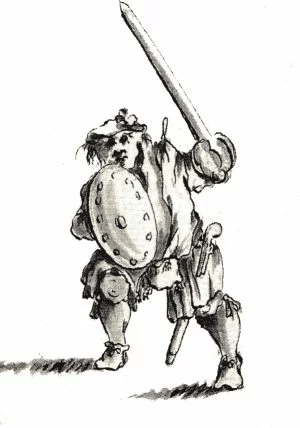
Had Scott and his men realised how small the initial Jacobite force at Highbridge had been, they may well have attempted to push their way through to reach Fort William which was just a short distance away, “but they unadvisedly retreated towards Fort Augustus… a part of the way lined with rocks, and all through the enemies country.”7
Scott had lost around five men killed and more than a dozen wounded, while the Jacobites had not lost a single man in the engagement.
After Highbridge
Donald Cameron of Lochiel arrived shortly after the surrender of Captain Scott and took charge of the captured redcoats, who were initially taken to the nearby Achnacarry Inn before being marched to Glenfinnan. There, they would meet Charles Edward Stuart and witness the raising of the Jacobite standard on 19 August.
The wounded Captain Scott was taken to Lochiel’s residence of Achnacarry House, where he was treated as a friend rather than an enemy, and his wound was attended to by Lochiel’s wife. Lochiel released Captain Scott on parole so that he could obtain medical treatment at Fort William, following the deputy governor Captain Campbell’s refusal to dispatch a surgeon.
Despite the Jacobites’ small victory over a detachment from the British Army’s most senior line regiment, Duncan Forbes of Culloden, the Lord President of the Court of Session, downplayed the incident at Highbridge. In correspondence addressed to Sir Alexander Macdonald of Sleat, he expressed:
Two companies of the Royal made prisoners, sounds pretty well, and will surely be passed for a notable achievement; but when it is considered that these companies were not half compleat; that they were lads picked up last season in the Low Country, without any thing of the Royal but the name, and that their officers were raw, the achieves ment is not by any means so important.8
On 21 August, just as he was preparing to commence his march northward to confront the Jacobites, Cope informed the Marquis of Tweeddale, Secretary of State for Scotland, about the engagement:
I have heard Reports for some time, of Men being taken going to Fort William, which are now confirmed. The two additional Companies of St. Clair’s were on the 15th [sic] Instant attacked at Highbridge, and, as I am told, as they were endeavouring to retreat, the Enemy on the Side of the Hills fired on them, and obliged them to surrender; one Officer was wounded, some Men killed and wounded.9
Following the Jacobite victory over Cope at the battle of Prestonpans on 21 September 1745, the 2nd Battalion of the Royal Scots was shipped over from Ireland to assist in fighting the rebellion and saw action at the battles of Falkirk and Culloden. The battle-hardened 1st battalion was recalled from the war on the continent and was positioned on the south coast of England to defend against any French invasion attempt in support of the Jacobites.
Donald Macdonald of Tirindrish was captured at the Battle of Falkirk on 17 January 1746 and sent to Carlisle, where he was executed in October 1746. Before his execution, he claimed that he had been forced under pain of death to join the Jacobites by Alexander Macdonald of Keppoch.10 Alexander Macdonald of Keppoch was killed leading the charge of his clansmen at Culloden on 16 April 1746.
A cairn commemorating the event was erected at Highbridge in 1994 by the 1745 Association and is situated near the south side of the now-ruined bridge, of which only the pillars remain.11
Notes:
- Alexander Campbell to Lieutenant-General Sir John Cope, Fort William, 7 August 1745, Report of the proceedings and opinion of the Board of General Officers, on their examination into the conduct, behaviour, and proceedings of Lieutenant-General Sir John Cope (1749), p 15. ↩︎
- Sergeant Terrance Molloy to unknown, Ruthven Barracks, 25 August 1745, Culloden Papers (1815), p 386. ↩︎
- Lieutenant-General Sir John Cope to Duncan Forbes of Culloden, Edinburgh, 13 August 1745, Culloden Papers, p 370. ↩︎
- Lieutenant-General Henry Hawley to the Duke of Newcastle, Edinburgh, 31 December 1745, Cumberland Papers, Royal Archives. ↩︎
- John Marchant, The History of the Present Rebellion (London 1746), p 16; John Home, The History of the Rebellion in Scotland in 1745, (Edinburgh 1822), p 41. ↩︎
- John Murray, Robert Fitzroy Bell (ed) Memorials of John Murray of Broughton: Sometime Secretary to Prince Charles Edward, 1740-1747 (Edinburgh 1898), p 167. ↩︎
- Henrietta Tayler (ed), The History of the Rebellion in the years 1745 and 1746. ↩︎
- Duncan Forbes of Culloden to Sir Alexander Macdonald of Sleat, Culloden, 19 August 1745, Culloden Papers, p 376. ↩︎
- Lieutenant-General Sir John Cope to the Marquis of Tweeddale, Crieff, 21 August 1745, Report of the proceedings and opinion of the Board of General Officers, p 65. ↩︎
- SP 36/92/1/155: Donald Macdonald of Tirindrish appealed for mercy while awaiting execution at Carlisle and claimed he was forced to join the Jacobites under threat of military execution by Alexander Macdonald of Keppoch. ↩︎
- IWM memorial: https://www.iwm.org.uk/memorials/item/memorial/82380; Trove: https://www.trove.scot/place/241789 ↩︎
Article updated on 16 August 2026
Cite this article: Ritchie, N. S. (16 August 2025). Action at Highbridge: The first shots of the Jacobite ’45. Jacobite Wars. https://www.jacobitewars.com/articles/action-at-highbridge/
