

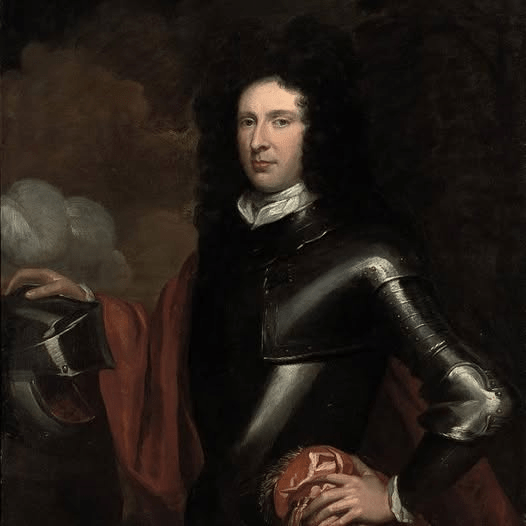
8 May 1705: Colonel Robert Duncanson was killed in action at Valencia de Alcántara during the War of the Spanish Succession. Born in Inveraray around 1660, Duncanson’s military career began during the Earl of Argyll’s Rising of 1685, and he is best remembered for his part in the Massacre of Glencoe in February 1692.
8 May 1746: The Duke of Cumberland wrote to the Duke of Newcastle informing him that Lord Loudoun and the Independent Highland Companies were establishing magazines at Fort Augustus, ready to supply the main army once it moved down the Great Glen. He stated that Sir Alexander Macdonald of Sleat’s and Norman Macleod of Dunvegan’s loyal service, “cannot be sufficiently commended” and also told Newcastle that the well-affected in the Highlands wished for many of the Jacobites, even whole clans, to be transported “not as Slaves, but, to make them Colonies in the West-Indies”.
8 May 1746: Rejecting the Duke of Cumberland’s offer of amnesty, Donald Cameron of Lochiel, along with the Jacobite chiefs Lochgarry, Clanranald and MacDonald of Barisdale, agreed to muster their men and continue the rising during a meeting held at Murlagan on the shores of Loch Arkaig. In the end, very few of their clansmen would show up for the muster. In rejecting Cumberland’s amnesty offer to the chiefs and their followers who laid down their arms, the chiefs continued to put their people in unnecessary danger. Cumberland had little interest in campaigning in the western highlands and was keen to get back to the allied war effort in Flanders, but would now begin preparations to move his army from Inverness down the Great Glen to Fort Augustus.
Article first published 8 May 2025
