

24 July 1689: The Duke of Hamilton wrote to Lord John Murray stating that Major-General Hugh Mackay was moving to his relief and encouraged him to continue the blockade of the Jacobite-held Blair Castle until Mackay – who was due to leave Stirling the next day – arrived.1
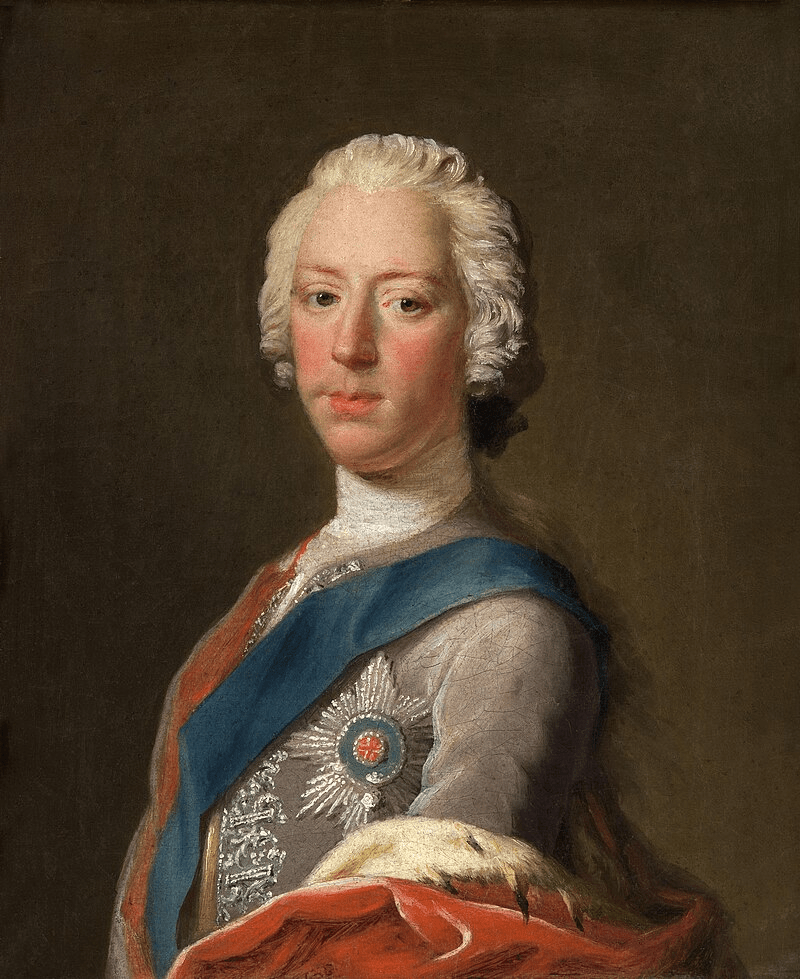
24 July 1745: Alexander Macdonald of Boisdale (brother of Clanranald) rowed over from Kilbride on South Uist to the Isle of Eriskay to meet with Charles Edward Stuart, who had landed there the day before. Macdonald told Charles to return to France as his enterprise was unlikely to succeed, and he delivered a message from Alexander Macdonald of Sleat and Norman Macleod of Dunvegan, which stated the same. Charles held a council in which the majority of his followers were of the opinion that they should return to France. Macdonald of Boisdale also prevented Clanranald’s islemen from joining with Charles. Charles, however, rejected the calls to return and decided to continue, and the following day would land on the mainland on the shores of Loch nan Uamh. Both Macdonald of Sleat and Norman Macleod of Dunvegan would raise men for the government.2
24 July 1745: With a warrant issued by the Lord Advocate, Captain Duncan Campbell of Inverawe with his company from Lord John Murray’s Highland Regiment (Black Watch) attempted to apprehend the Jacobite Duke of Perth. The Duke gave Captain Campbell the slip after dining with him and sneaked out of his house.3
Notes:
- Chronicles of the Atholl and Tullibardine families, vol 1, p 292. ↩︎
- John William O’Sullivan, Alistair Taylor (ed), Henrietta Taylor (ed), 1745 and After, (London 1938), p 52. ↩︎
- Report of the proceedings and opinion of the Board of General Officers, on their examination into the conduct, behaviour, and proceedings of Lieutenant-General Sir John Cope (1749), p 53. ↩︎
Article first published on 24 July 2025
